Philip Tattaglia
The GodfatherPhilip Tattaglia is the head of the Tattaglia Family and one of the principal opponents of Vito Corleone. He commands a powerful but morally compromised organization, becomes entangled in the attempt to displace the Corleone Family, and survives the resulting peace only long enough to be killed in a private motel room. His trajectory moves from political and criminal challenger to exposed casualty of the order he helped unleash.
Position and Character
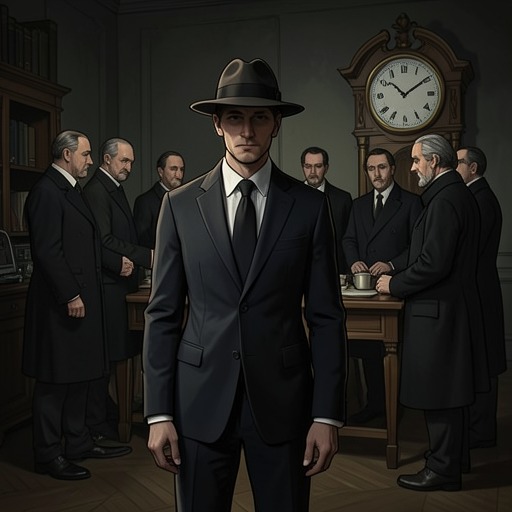
Philip Tattaglia is introduced as a sixty-year-old dandy and woman-chaser who is regarded with slight contempt by the other heads of the New York Families. They know that he allowed himself to be dominated by Virgil Sollozzo and was effectively led by him, making Tattaglia responsible in their eyes for the upheaval that has disrupted ordinary business among the Families. His weakness is not merely private; it becomes a public sign that he lacks the command expected of a family chief.
The Tattaglia Family's principal business is prostitution. It also controls most of the nightclubs in the United States and can place performers anywhere in the country. Philip Tattaglia uses strong-arm methods to seize promising singers and comedians and to intrude upon record companies, but prostitution remains the Family's main source of income. Its operations depend on women, pimps, liquor licenses, laundries, and nightclub influence, giving Tattaglia's power a commercial reach that extends beyond street violence.
His own complaints reveal the organization from within. He repeatedly laments laundry bills, unreliable girls, and treacherous pimps, while owning the laundry company that performs the work. He also complains about officials who control liquor licenses and boasts that the money he has paid those guardians of official seals has made more millionaires than Wall Street. The details present him as both exploiter and anxious businessman, preoccupied with operating costs even while his Family participates in coercion and abuse.
Conflict with the Corleone Family
Tattaglia directly challenges the power of the Corleone Family by supporting Sollozzo. The challenge nearly succeeds, and its consequences help produce the 1947 war between the Corleone Family and the Five Families allied against it. The conflict becomes expensive for both sides and is intensified by police pressure surrounding the murder of Captain McCluskey. Because the authorities withdraw the protection that usually shields gambling and vice operations, the Corleone Family's numbers and policy branches suffer raids, arrests, and heavy financial losses.
The larger structure of the conflict is shaped by the balance among criminal organizations. Vito Corleone's earlier system had relied on personal loyalty, political contacts, layered insulation, and agreements that restrained violence among the Families. Those arrangements treated the underworld as a world with its own internal authority, territory, and rules. Tattaglia's alliance with Sollozzo tests that order and helps convert competition over narcotics and influence into open war.
Tattaglia's position is also overshadowed by Emilio Barzini, his closest ally. Barzini controls gambling, prostitution, strong-arm operations, narcotics, and territory in and around New York, while maintaining ties to Cleveland, the West Coast, Las Vegas, Reno, Miami Beach, Cuba, and even Sicily. He seeks to replace Vito Corleone as the country's most powerful and respected Mafia leader. Against this colder and more modern strategist, Tattaglia appears less like an independent architect of policy than a compromised elder whose organization has become useful to a stronger rival.
The Peace Conference
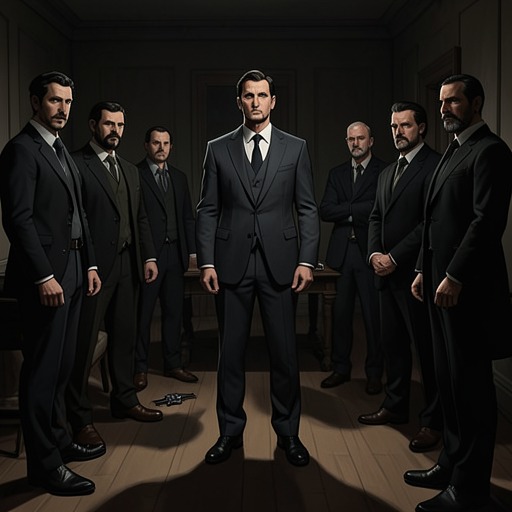
At the peace conference following the war, Tattaglia is the last major participant to arrive. He remains uneasy because the murder of Santino Corleone has made him the most vulnerable person present if hostilities resume. While the other Families seek to restore commercial stability, Tattaglia must confront the possibility that Vito Corleone may eventually retaliate for his son's death.
Tattaglia therefore asks for strict assurances. He wants to know whether Vito Corleone will attempt individual vengeance after his position grows stronger, whether the Families will truly live in peace, and whether their promises of friendship can be trusted several years into the future. His anxiety places the emotional fact of Santino Corleone's murder inside the conference's practical negotiations: peace is not simply a business arrangement, but a restraint imposed on grief and revenge.
Vito Corleone answers by renouncing vengeance for the common good and promising that, while he remains responsible for the actions of his Family, no one present will be attacked without just cause and extreme provocation. He also frames the agreement as a collective defense against outside interference, insisting that the Families must manage their own affairs rather than submit to distant authorities who make laws for their own interests. Tattaglia receives the assurance he requests, but the scene also marks his dependence on Vito Corleone's word. The peace protects him only so long as the new balance of power holds.
Death and Aftermath
The settlement does not save Philip Tattaglia. After a year of political maneuvering, Michael Corleone becomes the most powerful Family chief in the United States, and the Corleone Family's bloody victory is completed through coordinated removals of its principal enemies. In a motel outside Wantagh, Rocco Lampone finds Tattaglia naked beside a young girl and shoots him four times in the belly before returning to the Long Beach mall.
The setting and manner of the killing reduce the former Family chief from a public rival to an exposed private body. His age, sexual appetite, and association with prostitution, previously treated as elements of his public identity, become part of the circumstances of his death. The execution is not presented as a duel or a negotiated reckoning. It is an operation carried out through transport, telephone signals, exchanged cars, a railroad station, and a motel—a demonstration of the disciplined organization that has superseded Tattaglia's unstable leadership.
Tattaglia's death confirms the collapse of the old opposition to Michael Corleone. By the following year, the Corleone Family is unchallengeable; Clemenza has his own Family, Rocco Lampone serves as a Corleone caporegime, and Albert Neri heads security for the Family-controlled hotels in Nevada. Michael is able to close the New York operation and move the center of the Family's power westward. Philip Tattaglia thus becomes one of the dead whose removal makes the Family's transition from New York conflict toward centralized, geographically expanded control possible.
Narrative Significance
Philip Tattaglia embodies the difference between nominal authority and effective command. He possesses a Family, territory, money, and influence, yet the narrative repeatedly qualifies his power: Sollozzo dominates him, other chiefs hold him in contempt, and Barzini overshadows him strategically. His organization is extensive but built around exploitation and unstable personnel, while the Corleone system emphasizes loyalty, political relationships, layered command, and long-term planning.
His relationship to Vito Corleone also sharpens the novel's depiction of criminal society as an alternative political order. Vito Corleone can grant protection, arrange employment, influence officials, and restrain vengeance; his authority rests simultaneously on favors, fear, friendship, and organizational structure. Tattaglia participates in that world but cannot command its moral language with equal force. When he asks for peace of mind, he reveals that the system's promises depend on the continued credibility of the man who offers them.
The contrast is especially pointed because Tattaglia's Family has helped disturb the very order on which its profits depend. Vito Corleone's world is described as one in which people come to him for help and incur debts of friendship, while the Tattaglia operation is centered on prostitution, coercion, and the buying of official permissions. Tattaglia is therefore not only an enemy defeated by Michael Corleone; he is a figure through whom the narrative contrasts personal patronage and strategic governance with a more openly predatory commercial model.